


01
Two sessions a day
A morning and an evening pool session: warm-up, technique drills, main set and cool-down, with sets written for your level.
Every camp is a package: dates, venue and everything included.
Indoor Olympic pool
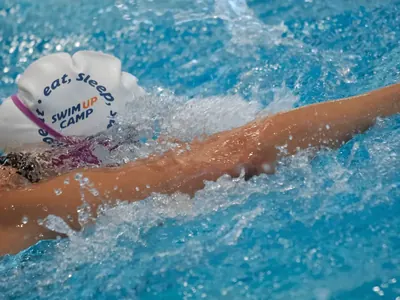
Being planned
Gloria Sports Arena, Belek · 200 m prerequisiteOutdoor Olympic pool
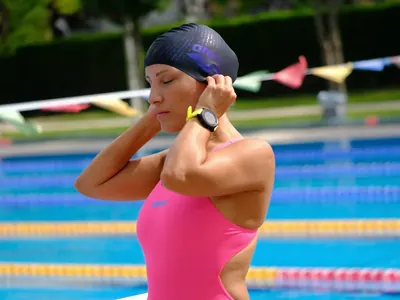
Being planned
Summer season only · 200 m prerequisiteSea
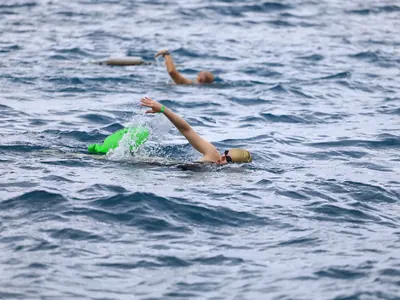
Completed · October 2026
Select · Kemer · prerequisite 400 mNext camp
Applications open
No camp is open right now. Once dates are set, we reply to anyone who wrote to us before the public announcement.
Ask about dates Request a placeCamp
Team
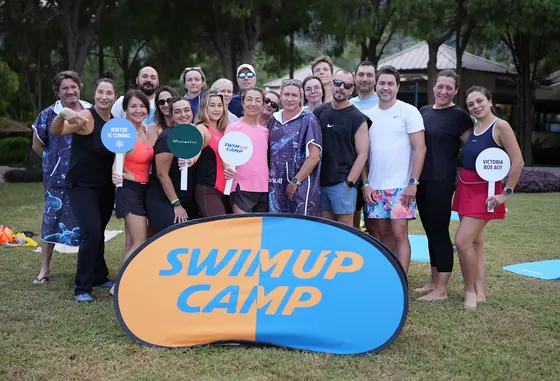 Last camp · 7 Swim Up Open Water · Select 1–4 October 2026 · Champion Holiday Village, Kemer
The core of the method
Training is at the heart of Swim Up camps: two pool sessions a day, endurance sets and dryland training built for swimmers. At the camps whose announcement includes it, underwater technical analysis supports that work.

Training
01
A morning and an evening pool session: warm-up, technique drills, main set and cool-down, with sets written for your level.
02
Long, varied sets written in the Russian school: aerobic endurance, pace and race speed together.
03
Shoulder health, core and mobility, with strength work for a body that holds the right position in the water.
The pool programme, the sets, dryland and strength work are run by our head coach Viktoriya Üçüncü.
Underwater technical analysis · at the camps that include it
01
Underwater technical analysis, with surface and drone footage when conditions allow.
02
National swimming coaches go through the footage with you in fine detail and explain each fault.
03
We set three priorities for you and write the rest of the sessions around them.
Underwater comes first

Underwater camera
For the first time, you see what your stroke really does under water. Everything the surface hides shows up from this angle.

Surface camera and drone · when conditions allow
The view from the surface and the air: your pace, your breathing and your line. In open water, most lost time comes from the line you swim, not from speed.
Underwater technical analysis runs at the camps whose announcement includes it. Surface and drone footage are added when weather, light and the venue allow; at Swim Up Open Water, line analysis depends on the same conditions.
Correct · frame by frame
The coach slows the footage, freezes the key frame and compares it with the right line. What you see on screen is what your stroke really does.


What else the camera looks at
The drawings are illustrative: they show what the coach looks at, not measurements.
Underwater · from filming to plan
Underwater technical analysis runs at the Swim Up Winter, Summer and Open Water camps whose announcement includes it, as part of the package.
Seeing a fault isn't enough. Changing it takes days of repetition and a coach watching, and only a camp makes all of that possible. Your recordings and notes are shared with you digitally after camp.
FAQ
No. Analysis is part of the camp programme; we don't offer it as a single session outside camp.
Yes. Underwater filming and the analysis session with a coach are part of the camp package.
Yes. Fixing a habit before it settles is far easier than unpicking it later.
Yes. Your recordings and analysis notes are shared with you digitally after camp.
A question, or curious about dates? Write to us and our team replies. Nothing binds you.
No tracking cookies.
We use no advertising or tracking cookies. We only remember the display preferences you choose in your browser, and our forms use Cloudflare’s security check. YouTube videos load only when you press play.