

Video Analysis Swim Camps: How They Work
What happens at a swim camp with underwater video analysis? Underwater filming, frame-by-frame review with national coaches and three priorities to correct.
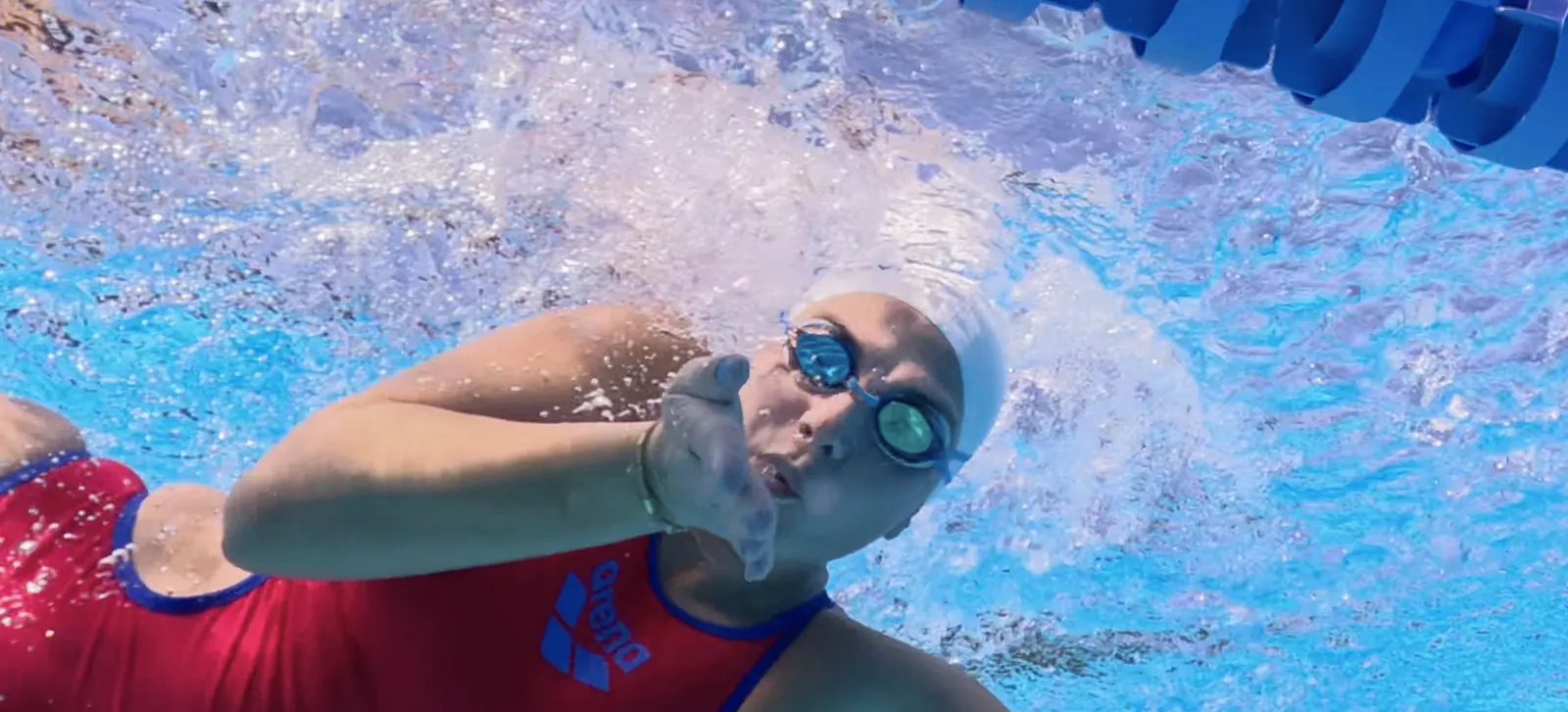
In short: Video analysis shows you the stroke you actually swim. This guide explains what footage measures, what the underwater and surface angles show and how the process runs at camp. Our method is on the method page.
The stroke you feel and the stroke you swim are rarely the same. Most adult swimmers know this in theory. Very few have seen it.
Video analysis closes that gap. This is how a camp built around it works, what it can tell you and where it stops being useful.
What video analysis measures
Good footage lets a coach look at things that cannot be judged from the deck:
- Entry and catch. Where the hand lands, how it enters, how early the forearm takes hold of the water.
- Body line. Whether hips and legs sit high or drag, and how much the body moves side to side.
- Rotation. How the hips and shoulders turn together, and when.
- Breathing. How much the head lifts or turns, and what that does to the rest of the stroke.
- Kick timing. Whether the legs help the stroke or fight it.
- Timing and rhythm. The gap between one arm finishing and the other starting.
Academic work on swimming biomechanics uses far more sophisticated tools than a camp camera: multi-camera motion capture and instrumented measurement of forces. A camp does not replicate a laboratory, and it should not claim to. What it does offer is something simpler and very practical: a clear, repeatable view of your stroke that you and a coach can discuss.
Underwater and surface angles: what each shows
The underwater view is the core: underwater technical analysis runs at the camps whose announcement includes it. Surface footage is added when weather, light and the venue allow. The two views answer different questions.
Underwater footage shows the part of the stroke that does the work. You see the catch, the pull path, the kick and the body line. Most faults that cost efficiency are hidden here.
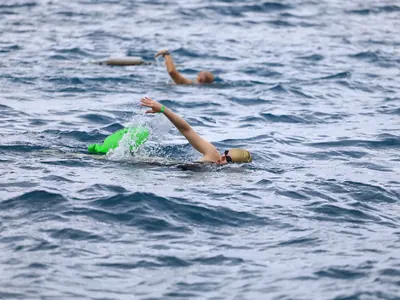
Surface footage shows what the water hides: head position, arm recovery, breathing, rotation as it appears from outside, and how your pace holds over a length. In open water, a surface view also shows your line and rhythm over distance.
When we have both, they complete each other. A neat pull underwater can come with a head that lifts on every breath; a calm surface stroke can hide a collapsed elbow below.
Measure, explain, correct: the process
At Swim Up camps that include underwater technical analysis, the sequence is built on three steps.
- Measure. We film your stroke underwater, and from the surface when conditions allow. Filming happens once per camp.
- Explain. National swimming coaches review the footage with you, frame by frame, and explain each fault.
- Correct. We agree three priorities and work on them in the pool, session after session.
Three priorities is a deliberate limit. A stroke has dozens of details, but a swimmer can change only a few at a time. Fixing the one or two that matter most gives more than a long list you cannot remember.
The first two steps take a session or two. The third takes the rest of the camp, because a change that is understood is not the same as a change that is made. It needs repetition and a coach watching. That is the reason we do this in a camp format: see the method page for the full picture.
Consent and image use
Footage of your body is personal. A responsible camp should tell you in advance:
- who films you and why;
- who sees the footage;
- whether any of it will be used in publicity, and that this requires your agreement;
- whether you keep your recordings.
At Swim Up Camp your recordings and analysis notes are shared with you digitally after camp, and no participant’s footage is published without their consent. If you prefer not to appear in any public material, say so when you apply and it is respected.
When conditions allow drone footage at open water camps, it follows local rules on drones for the venue in question.
Where video analysis has limits
It is worth being straight about what video cannot do.
- It cannot change your stroke on its own. Seeing a fault is the start, not the end.
- It does not replace a coach. Footage needs interpreting, and the same image can mean different things in different swimmers.
- It is not a medical test. If you have pain, see a physiotherapist or doctor.
- It is not a guarantee of speed. Stroke changes affect people differently, and we do not promise a time or a result.
- A single clip can mislead. Fatigue, lighting and camera angle change what you see, which is why we film at consistent points.
Used honestly, video is a way to replace guesswork with something you can point at.
Keeping progress after camp
The risk after any camp is that the old stroke returns. A few habits help:
- Keep your footage, three priorities and drill list where you can find them. Review them before sessions.
- Choose one thing per session. Swim a set with just that in mind.
- Slow down. Technique changes hold up at an easy pace before they hold up at race pace.
- Film yourself occasionally. Even a phone clip from the side of the pool reveals more than memory does.
A winter camp in an indoor pool is a good place to start this work, away from race pressure: see Swim Up Winter, or look at footage from past camps in the gallery.
One well-known approach to efficiency is explained in the Total Immersion method. For swimmers who have plateaued, see technique before volume. For the wider picture of what a camp involves, read the adult swim camp guide.
If you would like to see what a review of your own stroke looks like, request a place on the application page. Our team writes back within 48 hours, and applying commits you to nothing.
Measure. Explain. Correct. The three steps of camp.
See the methodMeasure. Explain. Correct. The three steps of camp.
See the methodMeasure. Explain. Correct. The three steps of camp.
See the method