

The Total Immersion Method Explained
What the Total Immersion swimming method teaches, its core ideas like gliding and drills, where it fits and where other approaches may suit you better.
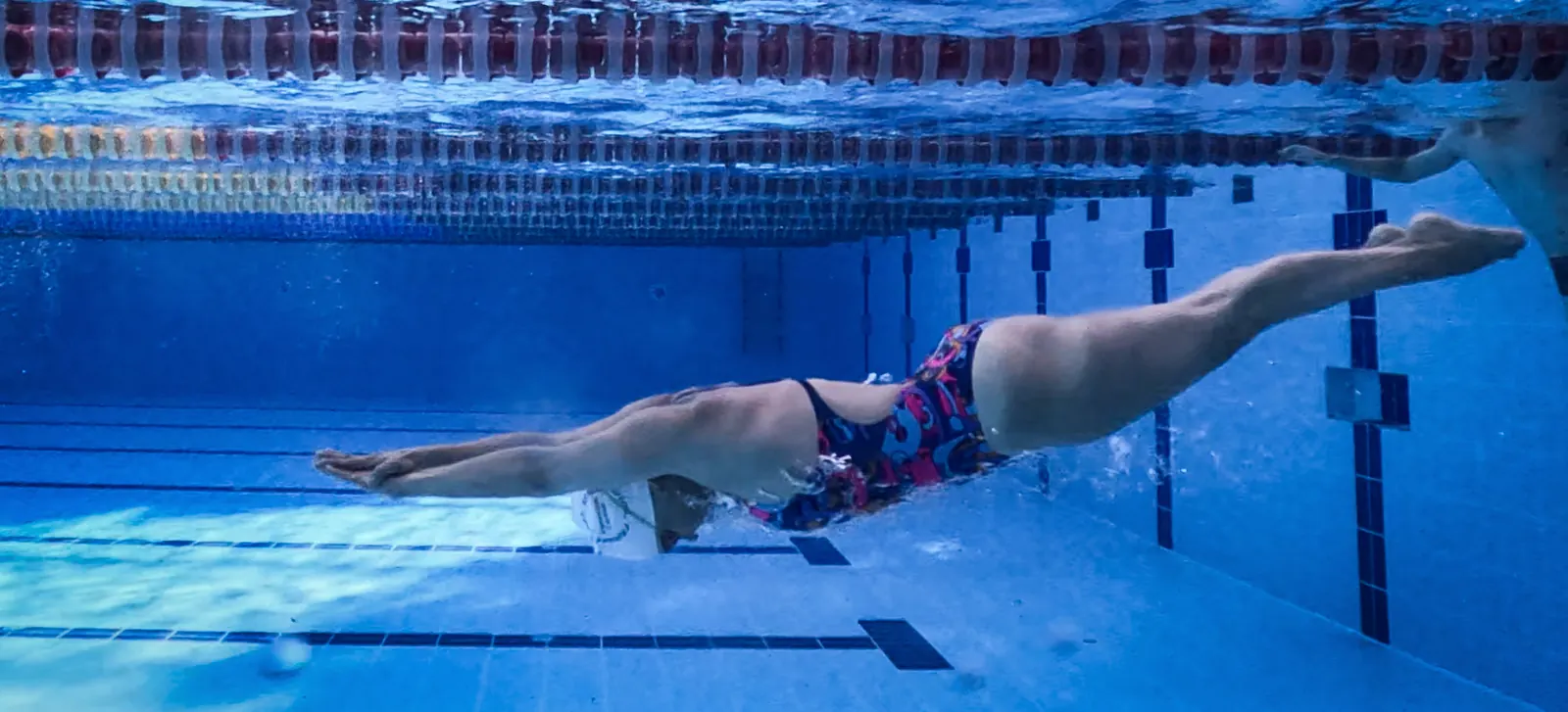
In short: Total Immersion is a method for teaching freestyle, developed by coach Terry Laughlin, built on the idea that many adult swimmers fight the water. It stresses efficiency, gliding and a lower stroke count. This is an independent explanation; we are not affiliated with Total Immersion.
Total Immersion is one of the best-known approaches to teaching freestyle. If you have read about swimming technique, you have probably met its ideas, even if you did not know where they came from.
This is an independent explanation, and nothing here is an endorsement or a comparison that ranks one method above another. We describe the core ideas as we understand them and say where they fit.
The core idea behind Total Immersion
Total Immersion was developed by the coach Terry Laughlin. Its starting point is that most adult swimmers fight the water. They kick hard, pull hard and tire quickly, because they treat swimming like a land sport in which more effort gives more speed.
The method turns that around. Water is dense, and drag rises quickly with speed, so the swimmer who reduces drag gains more than the swimmer who adds effort. The aim is to feel the water, to become long and streamlined, and to let the stroke come from the body’s position.
To summarise the main principles as the method presents them:
- Balance. Float in a horizontal position, with the head and chest relaxed and the hips near the surface.
- Streamlining. Reduce frontal resistance by swimming long and narrow, and by rotating rather than flattening.
- Propulsion. Use the whole body, especially rotation, rather than arms alone.
Check the official materials for the method’s own wording. They are the primary source, and we are paraphrasing.
Gliding and a lower stroke count
Two features are strongly associated with Total Immersion.
Gliding. After each stroke, the swimmer extends and holds a streamlined position before the next one. The idea is to make each stroke count and to make the body travel as far as possible per stroke.
Stroke count. Counting strokes per length is a feedback tool. If you can swim a length in fewer strokes at the same ease, you have probably become more efficient. Over time, the method encourages swimmers to lower their count by improving balance and reach, rather than by pulling harder.
Used sensibly, this gives swimmers who fight the water a clear task and a number to watch. Used rigidly, it can lead to an over-long glide that kills rhythm, and not every swimmer or event benefits from the same count. A triathlete swimming in choppy open water may need a different tempo from a calm pool swimmer.
How drills fit into the method
Drills are central. Rather than asking you to change your whole stroke at once, the method breaks it into small positions and practises each one slowly: body balance, a single arm, rotation, entry. You build the whole stroke from these pieces.
Why this can help:
- it slows everything down, so you can feel what is happening;
- it separates one fault from the rest;
- it gives you a short, specific task for each length.
Where care is needed:
- drills are a means, not an end. The test is whether the full stroke improves;
- a drill performed badly may teach a bad habit;
- swimming full stroke at your normal pace must follow, or the gains will not carry over.
Comparing swimming methods
Swimming instruction has several traditions. Some focus on balance and efficiency. Others focus on a powerful catch and a high-elbow pull. Others come from competitive coaching, where training volume and pace sets lead the work. Some combine all of these.
We do not claim that one is better than another. Evidence from sports science suggests that technique and fitness both matter, and that different swimmers respond differently. A fair way to compare approaches is by asking:
- Does it explain why a change should help?
- Does it let you check whether it is working?
- Does it fit the water you swim in, whether pool, sea or race?
- Does it adapt to your body, rather than applying one template to everyone?
A method that cannot answer those questions is hard to trust, whatever its name.
Who the method suits
Total Immersion tends to appeal to:
- adults who learnt to swim late or never had stroke coaching;
- swimmers who tire quickly and want to use less energy;
- people who like a clear, step-by-step system with drills;
- swimmers returning after a break who want to rebuild calmly.
Other approaches may suit you better if you:
- want race-pace sets and structured squad training;
- already have efficient technique and need training volume;
- need coaching built around a specific event, such as open water mass starts or triathlon.
Ask what you want to change, then choose the method that addresses it.
How Swim Up approaches technique: measure, explain, correct
Our approach is different in form. It does not start with a doctrine. It starts with your stroke.
- Measure. We film you underwater, and from the surface when conditions allow.
- Explain. National swimming coaches review the footage with you frame by frame, explain your faults and agree three priorities.
- Correct. The rest of the sessions are built on those priorities, corrected in the water with a coach watching.
The drills and exercises we use depend on what the footage shows. One swimmer may need balance work in the spirit of Total Immersion. Another may need a stronger catch, or help holding technique under fatigue. The method is the process, not a set of exercises.
For swimmers who have plateaued, see technique before volume. For the weekly structure, see the adult swim training plan.
You can read how it works on the method page, and see the setting for it on the Swim Up Winter page. Common questions, including who the analysis suits, are in the FAQ. If you would like to see your own stroke on screen, the next step is the method page.
Measure. Explain. Correct. The three steps of camp.
See the methodMeasure. Explain. Correct. The three steps of camp.
See the methodMeasure. Explain. Correct. The three steps of camp.
See the method