

Adult Swim Camp Guide: What to Expect
A practical guide to adult swim camps: who they suit, how levels work, what a typical day looks like and what you should have achieved by the end.
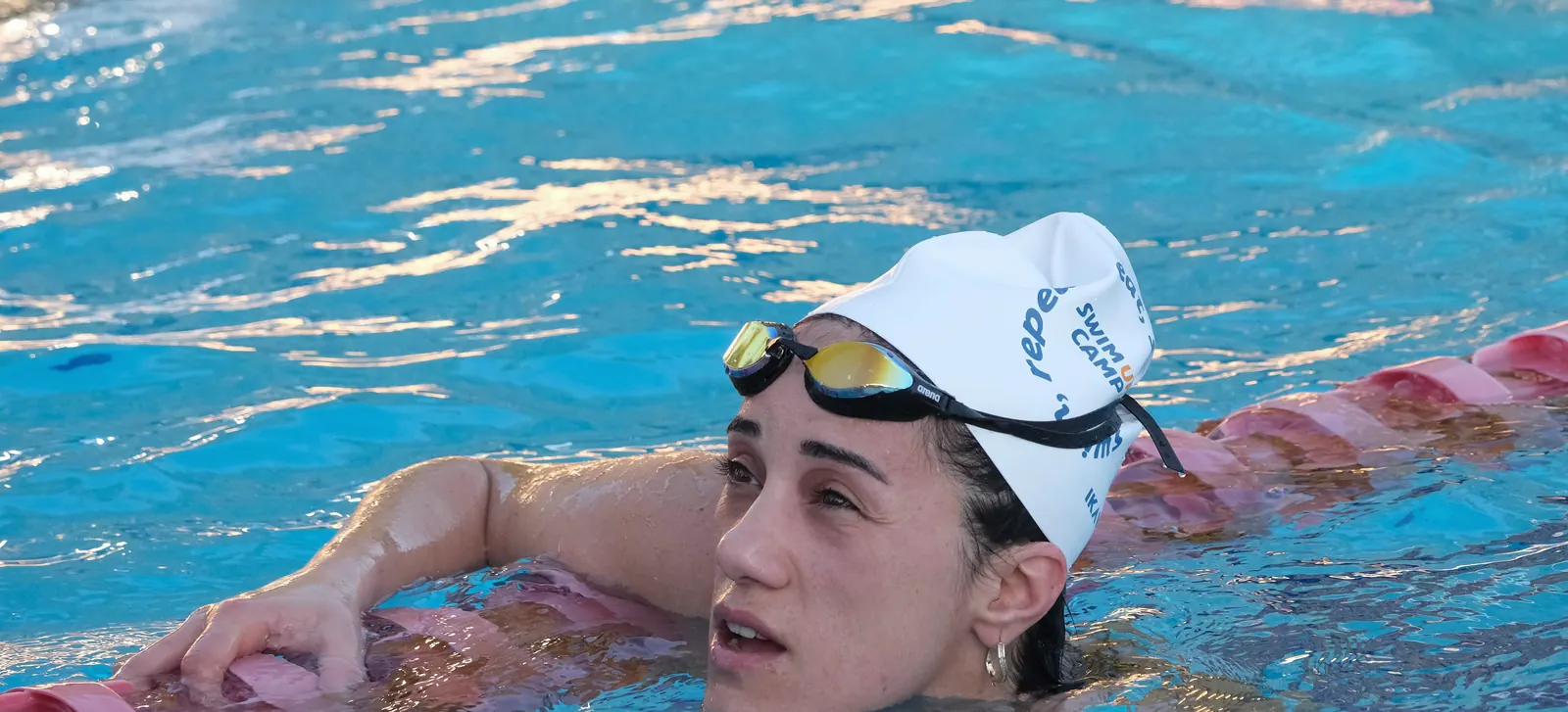
In short: An adult swim camp is for people who already swim and want to swim better. The prerequisite is 200 m or 400 m without stopping, depending on the camp. Current programmes are on the camps page.
An adult swim camp is a few days away from your usual routine, spent entirely on your swimming. For many people it is the first time a coach has looked closely at their stroke since school.
This guide sets out who a camp suits, how levels and prerequisites work, what the days contain and how it differs from weekly lessons.
Who is an adult swim camp for?
Mostly for people who already swim and want to swim better:
- Triathletes who want a more efficient swim leg, or who are preparing to move from the pool to open water.
- Masters swimmers who train regularly but feel they have stopped improving.
- Fitness swimmers who swim a few lengths several times a week and are curious about their technique.
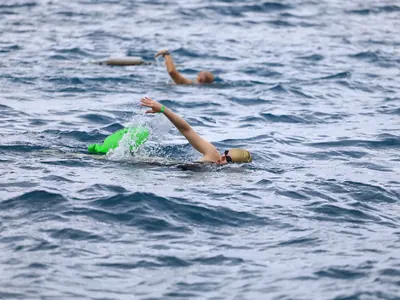
- Open water swimmers who want coaching before a race, a crossing or a holiday swim.
It is not a beginner course. If you cannot yet swim 200 m without stopping, the best first step is regular lessons or time in the pool. We say this plainly because starting a camp too early is the main reason for a poor week.
Levels: beginner, intermediate and advanced
Levels at a camp are not labels on a door. They are working groups, formed so that everyone in a lane can complete the same set.
- Newer to technique work. You swim comfortably but have never had your stroke filmed or analysed. The work centres on body line, breathing and a consistent catch.
- Intermediate. You train regularly and know the basics. The work centres on timing, rotation and holding technique when you tire.
- Advanced. You race or train with a club or masters squad. The work centres on small, high-value refinements and pacing.
How groups are formed matters more than what they are called. Ask who places you and on what evidence. At Swim Up Camp, the first filming and a pool assessment on day one decide it, and nobody is put into a set they cannot keep up with.
Prerequisites and why they exist
Our requirement is one number.
- Winter and Summer camps: 200 m without stopping.
- Open Water camps: 400 m without stopping and a pool assessment on day one.
We ask for a continuous distance because a camp is dense. Several sessions a day, with film review between them, is useful only if your body can keep swimming while you think about technique. If you are stopping every length, attention goes to survival rather than to the stroke.
It is also about the group. A coach splits attention across a lane, and a lane works when everyone can finish the set.
Prerequisites are set per camp and can change, so check the page of the camp you are considering. There is a longer explanation in our note on prerequisites. We do not set an age limit or a speed requirement.
A typical camp day
Every camp has its own programme, but the shape is similar. A sample day at Swim Up Camp runs from 07:30 to 21:00:
- A gentle start, with light stretching, then breakfast.
- A first pool session, with cameras recording.
- Video analysis late morning.
- Lunch and rest.
- A dryland session in the afternoon, then a second pool session.
- Dinner, then a talk, yoga, or an analysis recap.
Times are samples and change with each camp. You can see the full timetable on A day at camp.
The rhythm is deliberate. Swimming first, then looking, then correcting, then swimming again, with rest where the body absorbs it.
Camp versus lessons: what is different?
Weekly lessons and a camp do different jobs.
| Weekly lessons | Camp | |
|---|---|---|
| Frequency | One session, then a week of ordinary life | Several sessions a day for days in a row |
| Feedback | Spoken, in the moment | Filmed, reviewed, then repeated |
| Changing a habit | Slow, often undone between sessions | Faster, because repetition is continuous |
| Record | Your memory | Footage and notes you can keep |
| Cost in time | Small, spread out | Concentrated |
Neither is better. Lessons are good for steady progress and routine. A camp is good for a change that needs concentrated repetition, and for a fresh look at your stroke.
Most people do best by combining them: a camp to reset, lessons or training afterwards to keep it.
Questions to answer before you apply
Take a moment with these. They save time on both sides.
- Can I swim 200 m (or 400 m for open water) without stopping?
- What do I most want to change? One or two things is enough.
- Which camp suits that goal: Winter in an indoor pool, Summer, or Open Water?
- Do I have any health conditions I should check with a doctor first?
- Am I happy to be filmed?
- What do I need to arrange: leave, travel, a wetsuit for open water?
If the water itself is the worry, read overcoming fear of water. The kit list is in what to pack for a swim camp. Once you have applied, before swim camp covers the weeks that follow.
More answers sit in the FAQ. When you are ready, request a place and our team writes back within 48 hours. Applying commits you to nothing.
Have your place ready for the next camp.
Ask about datesHave your place ready for the next camp.
Ask about datesHave your place ready for the next camp.
Ask about dates