

English Channel Swim: Preparation Guide
How to prepare for an English Channel swim: CSA registration, the July to September season, cold water acclimatisation, pilots and the training you need.
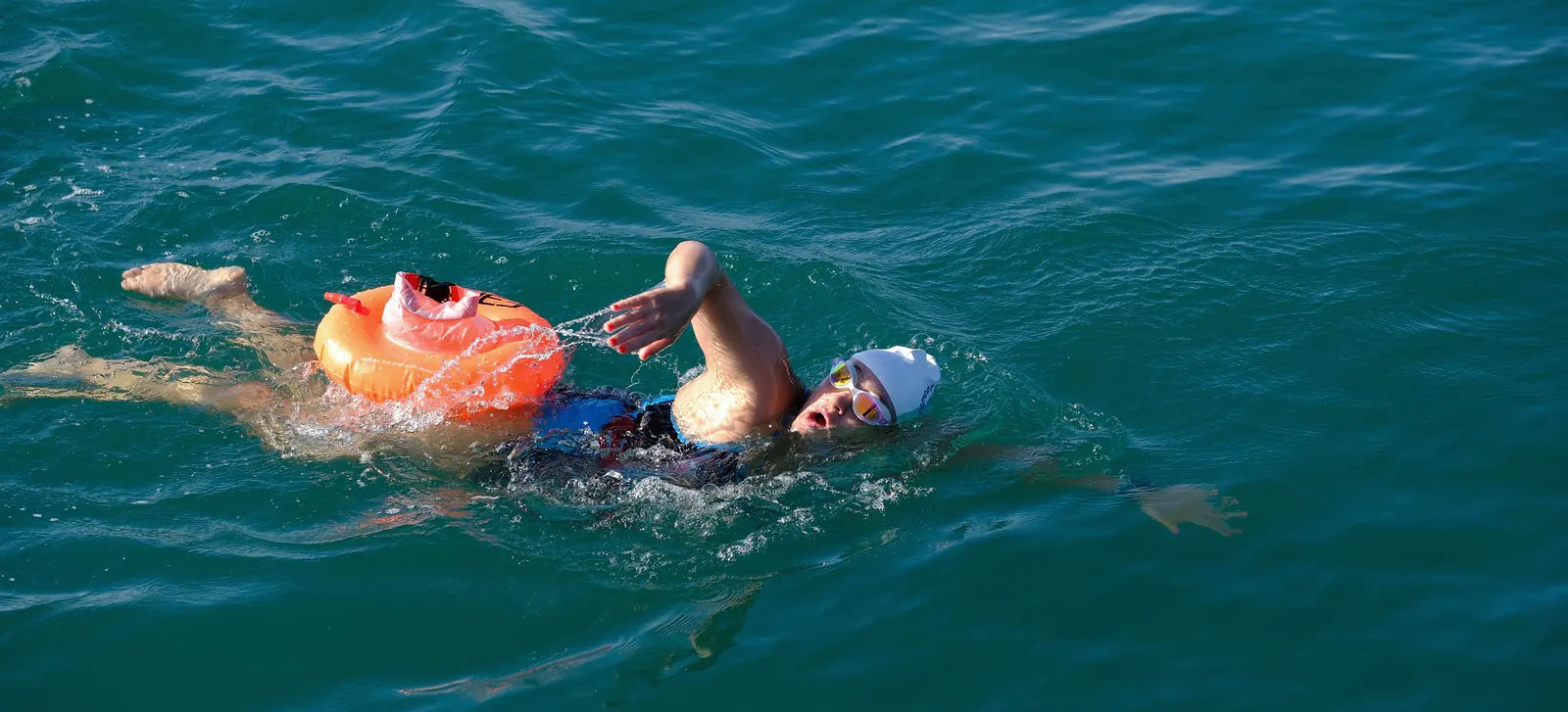
In short: A solo English Channel swim goes between England and France in cold, tidal water, and the track a swimmer takes is usually a curve, not a straight line. The guide covers CSA registration, the July to September season, acclimatisation and training. We do not run Channel swims.
The English Channel is a swim between England and France, in cold, tidal and busy water. It is one of the most famous challenges in open water, and one of the least forgiving to those who underestimate it.
This guide explains how a solo Channel swim is organised, what to prepare, and what training looks like. It is a general introduction, not a plan. We hold no official role and make no promise that our camps lead to one.
What is a Channel swim?
A Channel swim goes from the English coast to the French coast, or the other way round, without help of any kind. The route is not a straight line. Tides push the swimmer sideways, and the track a swimmer takes across the water is usually a long curve rather than the shortest path.
Several bodies govern attempts. The Channel Swimming Association (CSA) is one of them, and its rules are the ones we draw on here. Other associations have their own rules, so read those of the body you plan to swim under.
Under the CSA’s standard rules a swim has to be completed without assistance of any kind. That includes the swimwear you may use, which is limited to a standard costume and cap that do not provide thermal protection or buoyancy. In other words, no wetsuit.
CSA registration and rules
According to the CSA’s FAQ:
- you register your swim with the CSA;
- you book one of its recognised escort pilots;
- you must be at least 16 years old at the start of a solo swim;
- once your pilot tells the CSA your swim date, the CSA appoints an official observer to travel with you.
The FAQ also covers the rules that decide whether a swim counts: the costume and cap limits above, and the requirement to swim unaided.
Fees, qualifying swims and medical requirements change over time, and some figures published online are old. We do not quote any costs here. Contact the CSA directly and use its current published information.
Season: July to September
The CSA’s FAQ describes the swim season as July to September. The CS&PF’s FAQ is broader, running from late June to the end of September, with some swims in early October. Most swimmers aim for the warmest weeks within that.
The season is not a promise of a swim. Weather decides the day. Pilots work with a window of days, and a swimmer must be ready to go at short notice and accept that wind and tides can mean waiting. Plan some flexibility into your dates.
Water temperature and acclimatisation
The CSA says that during the main swimming season, July to September, you can expect water between 14 and 18 degrees Celsius.
That is cold, and it is the reason acclimatisation is not optional.
Know the risks:
- Cold shock. On sudden entry into cold water, breathing can become rapid and uncontrolled. It is a danger even for strong swimmers.
- Swimming failure and hypothermia. In longer swims, the body loses heat faster than it makes it, and arms and legs can stop working properly.
- After-drop. Core temperature can keep falling after you leave the water. Warming up properly and having someone with you matters.
- SIPE (swimming-induced pulmonary oedema). This is a recognised condition in which fluid builds up in the lungs during hard swimming. Breathlessness, coughing or a feeling of tightness that is not normal for you means getting out and seeking medical help.
If you have any heart, blood-pressure or respiratory condition, talk to a doctor before you begin cold-water training. For the gradual-entry approach, see our note on cold water acclimatisation.
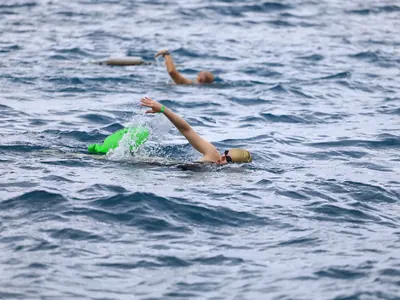
Do not train alone in cold water. The RNLI advises swimming with others, using a bright tow float and knowing how to rest on your back if you tire.
Pilots, observers and the swim window
A Channel swim involves three roles that every swimmer should understand:
- The pilot and their boat. The pilot reads weather and tides, picks your start time and navigates.
- The observer. Appointed by the association, the observer records the swim and confirms that the rules were followed.
- Your support crew. Feeding, encouragement and safety. Usually friends or family who know your plan.
Your window is a set of days. You agree it with your pilot, then wait for conditions. Nobody can promise a day.
Feeding is part of the plan. Practise your drink and food on long training swims, so there are no surprises during the real one.
Training plan: pool, open water and endurance
There is no single plan, and a coach who knows you should shape yours. The ingredients, in rough order of importance:
- A strong base in the pool. Regular sessions that build aerobic fitness. Efficient technique saves energy over hours.
- Cold-water exposure. A gradual build through the months before your swim, with safety cover.
- Long open water swims. Several of them, in company, practising feeding, sighting and pacing.
- Mental practice. Hours in the water require a strategy for the low points.
- Strength and mobility. Shoulder and core work that keeps the body together.
The sensible route for most swimmers is to begin with technique and open water skill before building distance. Better technique lowers the cost of every hour in the water.
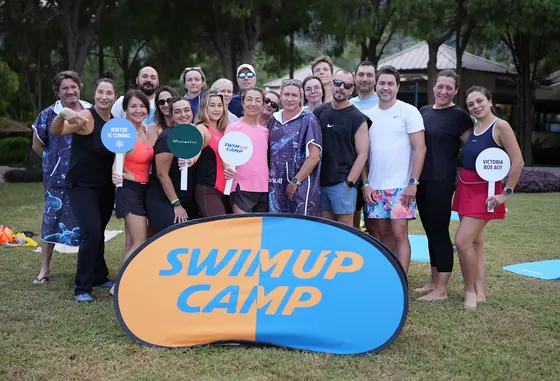
That is where our camps fit. Swim Up Open Water covers sighting, mass starts and pacing with a support boat and lifeguard at every session, and our method gives you footage and three priorities to carry into your training. The prerequisite is 400 m without stopping. It is a camp, not a Channel course, and it makes no promise of a crossing.
Questions about level or what is included are answered in the FAQ. To ask about the next open water camp, or to request a place when one is open, use the application page.
When a new camp has dates, we reply to anyone who wrote to us before the public announcement.
Ask about datesWhen a new camp has dates, we reply to anyone who wrote to us before the public announcement.
Ask about datesWhen a new camp has dates, we reply to anyone who wrote to us before the public announcement.
Ask about dates