

Cold Water Acclimatisation for Open Water
How to acclimatise to cold open water safely: gradual entry, controlled breathing, session length and warming up afterwards. Plain English.
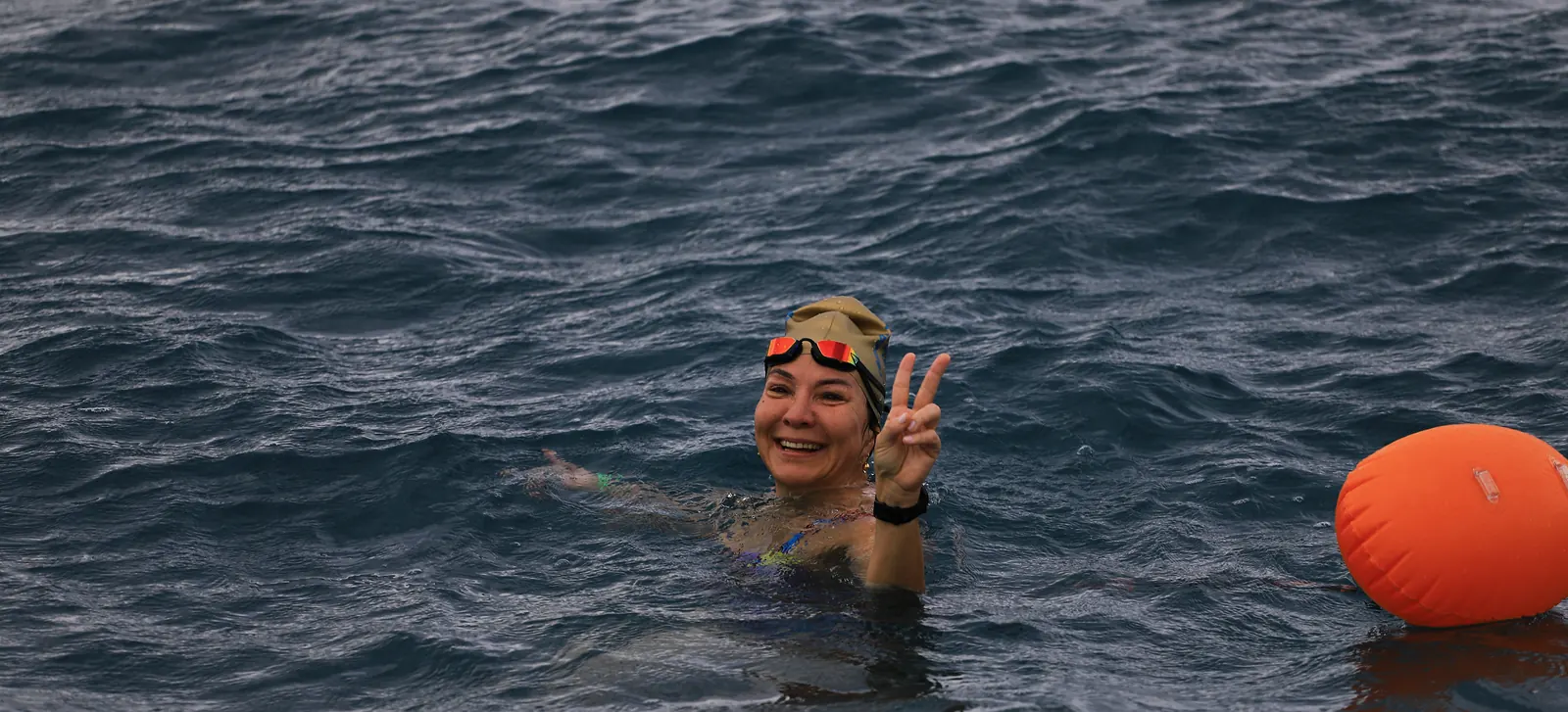
In short: Cold shock is the body’s reaction to sudden entry into cold water: a gasp reflex, rapid breathing and a surge in heart rate. Entering gradually and building up over several weeks is the safer approach. This guide gives a four-week plan, advice on warming up and a list of when not to get in. It is general information, not medical advice.
Cold water is the main reason experienced pool swimmers get into trouble in the sea. The pool is warm, the lane is straight and the wall is near. Open water in spring, autumn or at altitude is none of those.
This guide covers the main risks and a sensible way to get used to the cold. If you have a heart condition, high blood pressure, asthma or any other health issue, talk to your doctor before you start.
What cold shock does
When you enter cold water suddenly, the body reacts within seconds. This is called cold shock. The RNLI describes the main effects: a gasp reflex, rapid and uncontrolled breathing, and a surge in heart rate and blood pressure.
The gasp matters most. If your face is in the water when it happens, you can inhale water. Even strong swimmers can panic and lose control of their breathing.
For that reason, guidance for beginners is consistent:
- do not jump or dive in;
- assess the conditions first;
- walk in slowly;
- do not hold your breath, and wait until your breathing is under control before you swim;
- splash water on your arms, neck and face to reduce the reaction.
Cold shock is most intense at the start, so the first part of any cold swim is about patience.
Entering gradually: the right way
A routine you can repeat every time:
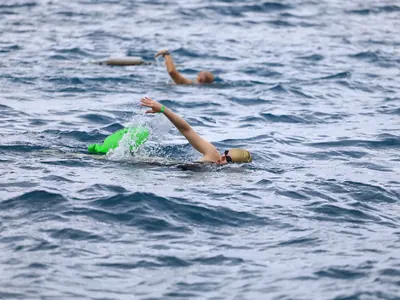
- Check conditions and never swim alone. Use a bright tow float.
- Enter slowly. Walk in up to your knees, then your waist. Pause.
- Control your breathing. Breathe out slowly and steadily until your breathing settles.
- Wet your arms, neck and face before you lower your shoulders.
- Start with a few easy strokes near the shore, keeping your feet within reach.
- Stay close. Early swims should be near an exit and near people.
If your breathing does not settle, get out. There is no prize for forcing it.
A four-week acclimatisation plan
Acclimatisation means short, regular exposure. Most of the adaptation is to the shock response, and it fades if you stop. This plan is a sensible shape, not a rule. Adjust it to you, and stop at any point if you feel unwell.
Week 1: short and shallow. Two or three visits. Spend a few minutes in the water, mostly standing, splashing and breathing. Get out before you are properly cold.
Week 2: slightly longer. Two or three visits. Swim a few easy strokes close to shore, and extend your time in small steps.
Week 3: build confidence. Two or three visits. Swim short loops in company. Practise breathing out into the water and a calm stroke.
Week 4: consolidate. Two or three visits. Swim a little further, with a partner and a float, but always leave while you still feel in control.
Rules for the whole four weeks:
- Stay inside your limits. Shivering, clumsy hands or a rising sense of panic mean it is time to get out.
- Cold water gets colder with depth and wind. Conditions change. Check them every time.
- Keep the same pattern. Two or three visits a week works better than one long swim.
- Account for the season. If the water is dropping each week, your plan has to adjust.
Every swimmer’s tolerance differs, so treat any temperature threshold you read online as a conversation starter, not a target.
What the research says about cold water
Cold water swimming has become popular, and claims about it vary widely. Here is a careful summary.
A 2025 systematic review and meta-analysis in PLOS ONE (Cain and colleagues) examined cold-water immersion in healthy adults. It pooled eleven studies, mostly of baths, at water temperatures between 7 and 15 degrees Celsius. Its findings were mixed and time-dependent: an acute inflammatory response straight after immersion, a reduction in reported stress some hours later, and some signs of better sleep quality and quality of life, but no clear effect on mood.
The authors themselves point to limits: few randomised trials, small samples and little diversity among participants. These were mostly baths and showers, not open water swimming, so the results do not map neatly onto a swim in the sea.
So we do not present benefits to immunity or mood as proven. Enjoying a cold swim is a good reason to do it. Treating it as a health treatment is not.
What is better established are the risks:
- cold shock on entry;
- reduced muscle function and swimming failure in longer exposures;
- hypothermia;
- after-drop;
- effects on the heart in people with existing conditions.
So the sensible position is: enjoy cold water if you like it, take the risks seriously and do not rely on it as a treatment.
Warming up after your swim
How you leave the water matters as much as how you enter.
- Get out earlier than you think you need to. Your body keeps cooling for a while after you stop.
- Dry quickly and change out of wet clothing.
- Put on warm layers, starting with the head and torso, and add a hat.
- Have a warm drink if you can. Avoid very hot showers straight away, which can make some people feel faint.
- Move gently. Light walking helps. Do not sit still in wet clothes.
- Stay with someone. You may not notice your own confusion.
Afterdrop is a real effect. Your core temperature can keep falling after you leave the water, as cooled blood from your arms and legs returns to your core. You can shiver more after you get out than in the water. Warm up gradually, keep an eye on one another and seek help if someone becomes confused, drowsy or cannot stop shivering.
When not to get in
Do not swim, or postpone, if:
- you feel unwell, have a fever, or have been drinking alcohol;
- you have not eaten or are very tired;
- the weather, tide or current is unsuitable, or you are unsure;
- you are alone with no one on the shore;
- you have a health condition and have not checked with a doctor;
- you have been told to stay out of the water by a lifeguard or safety crew.
On a camp, someone else makes some of these decisions for you. On our open water camps, weather, sea state and currents are checked before each session, a support boat and lifeguard are present at every session and a tow float is compulsory.
For fit and rules, read the swim wetsuit guide. For a famous race goal, see Bosphorus swim preparation. The criteria are set out in how to choose an open water swim camp.
Preparing your body for the cold is a good reason to take coaching before the season. See our method for how we structure it, and the FAQ for prerequisites. When you are ready, request a place on the application page.
Have your place ready for the next camp.
Ask about datesHave your place ready for the next camp.
Ask about datesHave your place ready for the next camp.
Ask about dates