

Swim Wetsuit Guide: Fit, Thickness and Rules
How to choose a swim wetsuit: thickness, cut, shoulder flexibility, fit checks and race rules for triathlon and open water. A short, practical guide.
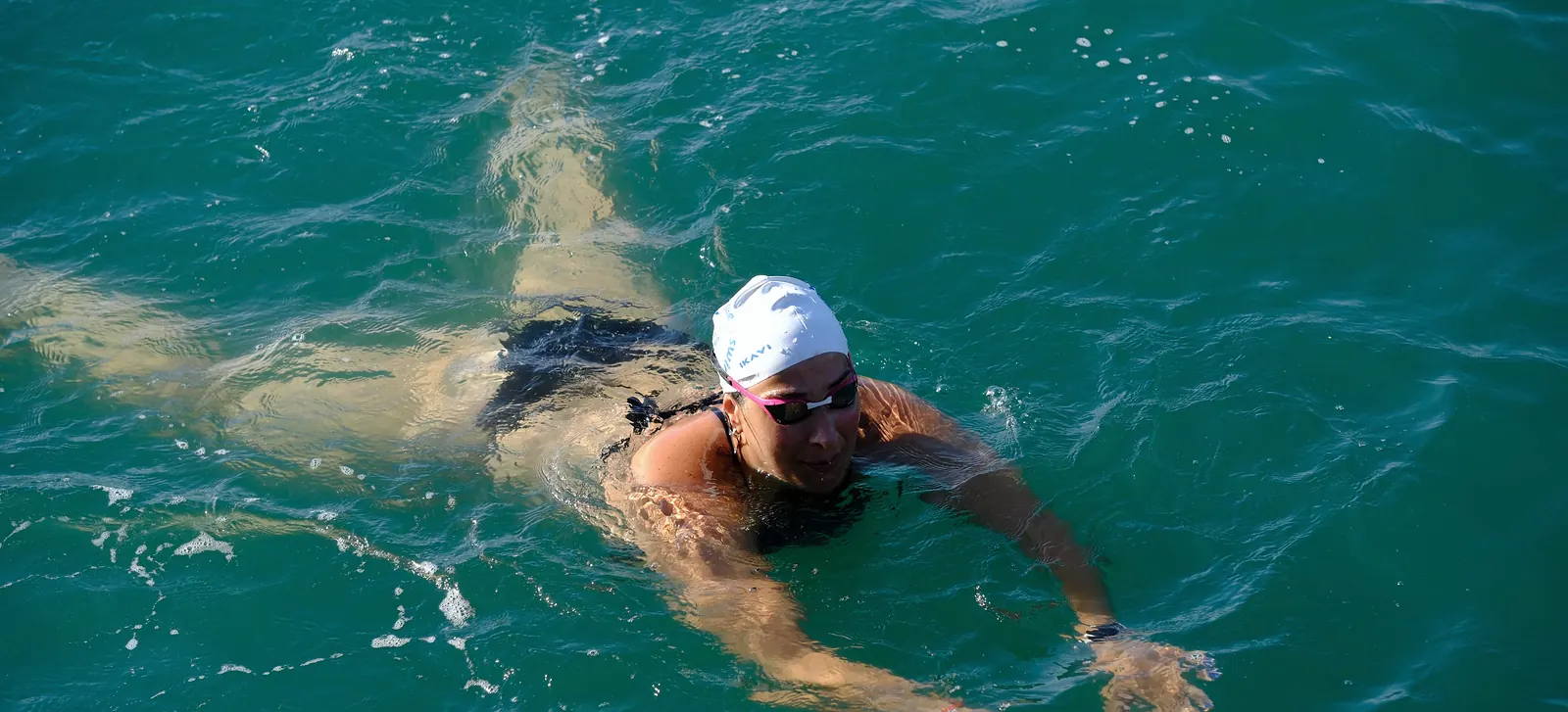
In short: A swimming wetsuit is thinner and more flexible than a diving suit and is cut to let your shoulders turn; fit matters most. Race rules differ, and some events, such as the Bosphorus swim, do not allow wetsuits at all. We do not recommend brands or quote prices.
A swimming wetsuit is not a diving suit. It is thinner, more flexible and cut to let your shoulders turn. Choosing one well changes how you feel in open water, and choosing badly leaves you with sore shoulders and a neck rubbed raw.
This is a short, practical guide. Brands and prices both change and depend on your body.
What a wetsuit does for your swim
A swimming wetsuit does three things.
- Warmth. Neoprene traps a thin layer of water against your skin, which your body warms. That gives you time in cold water.
- Buoyancy. Neoprene floats. Your hips and legs sit higher, which cuts drag, and many swimmers feel faster as a result.
- Comfort and confidence. Many swimmers feel safer in a suit, and that matters more than it sounds.
What it does not do is fix your stroke. A wetsuit hides some faults, such as sinking legs, and creates others, such as a shortened reach if the shoulders are tight. Practise in one before race day.
For wetsuit swims in cold water, see also our note on cold water acclimatisation.
Thickness and cut: buoyancy and flexibility
Swim wetsuits are made from neoprene panels of different thicknesses. In general:
- Thicker panels give more warmth and more buoyancy, but less flexibility.
- Thinner panels give more movement, particularly in the arms and shoulders.
Good swim suits use thick neoprene on the torso and legs, where buoyancy helps, and thinner material on the shoulders and arms. The suit is usually described by its panel thicknesses, such as “3 mm body, 1.5 mm arms”.
When you compare suits, check:
- Shoulder panels. Reach your arms overhead and rotate. The suit should not pull.
- Neck. It should seal without choking.
- Cut. Some suits are cut for athletic swimmers who need freedom, others for swimmers who want more buoyancy and warmth.
- Entry and exit. A suit should come off quickly if you plan to race a triathlon, and the zip should be easy to reach.
Fit: the most important factor
A suit that fits poorly will not work, however good the fabric. Neoprene should feel snug, like a second skin, without restricting your breathing or movement.
Check:
- Wrinkles and gaps. Loose areas let water flush through, which makes you cold. Gaps at the lower back, armpits and crotch are common.
- Shoulders. If the suit rides up when you reach, it is too tight or the wrong cut.
- Chest. You should be able to breathe fully. A suit that feels fine standing can squeeze when you are horizontal.
- Length. Check arms and legs. Short sleeves and legs let water in. Long ones bunch.
- Neck. It will rub. A little anti-chafe balm or a thin layer of lubricant helps, and test it in training.
Try the suit on dry, then in the water if you can. A shop fitting can only tell you so much. If you can hire or borrow a suit to test in a pool, do.
Remember that bodies change, so a suit that fitted two seasons ago may not now.
Race rules: temperature and thickness limits
Rules depend on the event and the governing body. For triathlon, organisations such as World Triathlon set wetsuit rules, including the water temperature above which wetsuits are not permitted and limits on neoprene thickness. Many national federations and event organisers apply their own versions of these.
We are not quoting figures, because they differ by organisation, by distance and by year. Always:
- read the rules of your specific event for the current season;
- check the race briefing for the water temperature on the day;
- find out whether a wetsuit is allowed, optional or banned, and whether swimmers who wear one are placed in a different category.
At some open water swims, such as the Bosphorus Cross-Continental Swim as described on SwimTrek’s 2026 page, wetsuits are not allowed. Never assume.
Training in a wetsuit
A wetsuit changes how you swim, so train in it.
- Start short. Begin with a few minutes and build up.
- Adjust your stroke. The suit lifts your hips, so you may kick less. It restricts your shoulders, so focus on a long, relaxed reach.
- Practise getting in and out. A tight suit is hard to put on, and slow in a transition.
- Swim with it in open water. Buoyancy feels different in the sea.
- Practise your breathing. A snug suit around the chest can make you feel as though you are working harder.
On our Open Water camp you try your wetsuit in the pool on day one, before you enter the sea.
You bring your own wetsuit; none is provided or hired out at camp. After you apply we share a recommendation based on the water temperature. The FAQ covers what is included.
Care and testing before race day
A suit lasts if you look after it.
- Rinse in fresh water after every swim, inside and out.
- Dry in the shade, hung from the waist or flat. Direct sun and heat damage neoprene.
- Do not fold sharply or store for months in a crumpled heap.
- Avoid sharp nails and rough surfaces when putting it on. Gloves help.
- Check seams and zips before a race.
The week before a race:
- swim at least once in the suit you will wear;
- check the fit again;
- pack anti-chafe balm, spare goggles and a warm layer for after.
The criteria are set out in how to choose an open water swim camp.
If you want to try these skills in a sheltered bay with support around you, request a place on an open water camp. Our team writes back within 48 hours.
Have your place ready for the next camp.
Ask about datesHave your place ready for the next camp.
Ask about datesHave your place ready for the next camp.
Ask about dates