

Your First Open Water Triathlon Swim
Your first open water triathlon swim: start, sighting, wetsuit rules, buoys and what to practise before race day. A calm guide for first-timers.
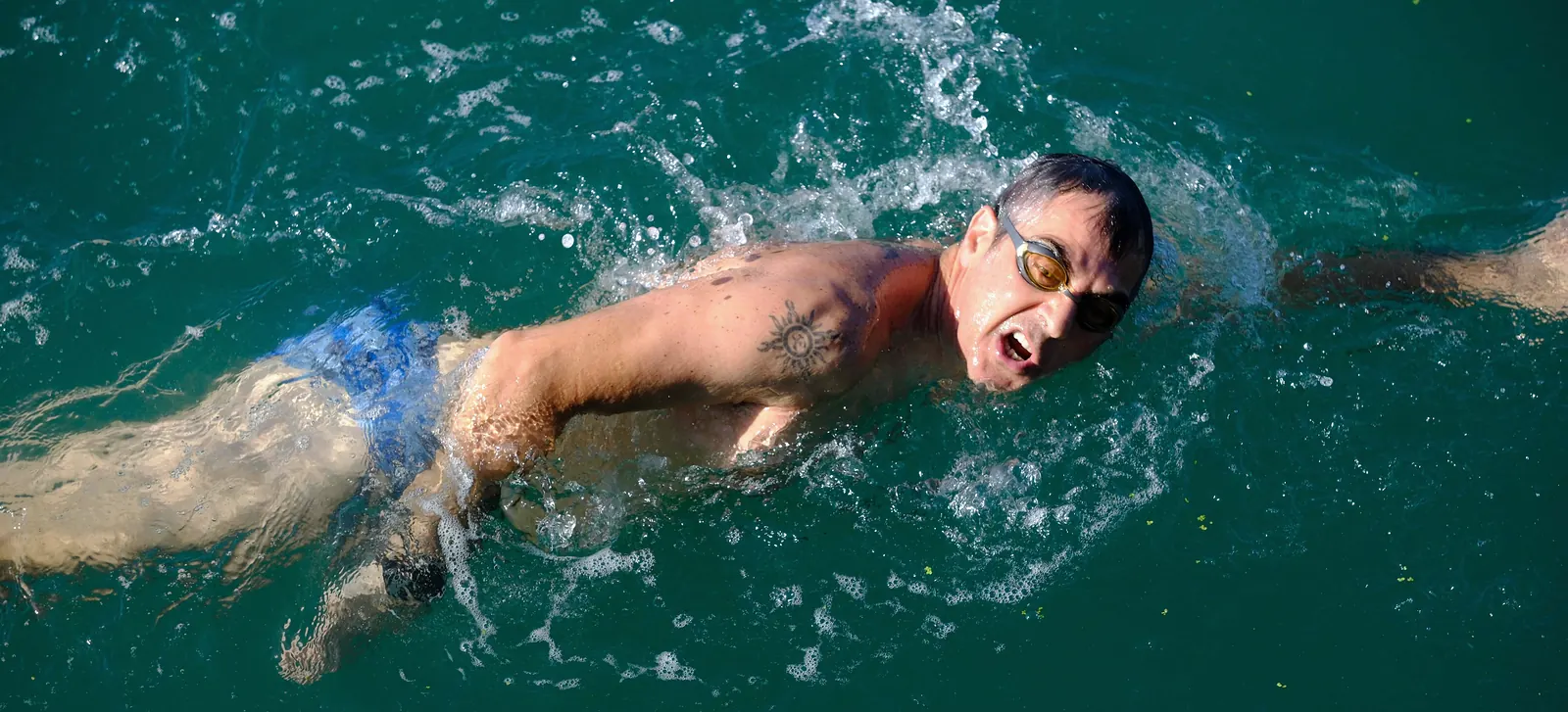
In short: The triathlon swim differs from pool swimming in ways you can practise: open water, a crowded start, sighting and buoy turns, and wetsuit rules on the day. This guide walks through each and ends with a race-morning checklist. Rules vary by event, so read your own race information.
The swim is the part of a first triathlon that worries people most. You may be fit, a good pool swimmer, and still feel uneasy about a start with dozens of others in open water.
That unease is sensible and manageable. This guide walks through what is different on race day and what to practise.
What is different on race day?
In a pool you know the water, the distance and the wall. On race day:
- No wall and no line. You steer yourself, using buoys and landmarks.
- Other swimmers. Contact is normal, especially near the start and at turns.
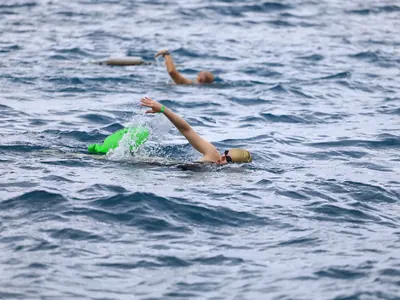
- Conditions. Chop, current, sun glare and cold can all appear.
- Adrenaline. Heart rate rises before you have swum a stroke, and breathing can feel tight.
- A time-limited course. You need to finish the swim in the cut-off set by the organiser.
None of it is unusual. All of it can be practised. The goal for a first race is to swim calmly and finish, not to race hard.
The start: crowds and position
Starts are the busiest moment. Some are mass starts, some are in waves, and some are rolling, where swimmers enter in small groups. Check the format in your race briefing.
Ideas for staying calm:
- Choose your position. Strong, confident swimmers go to the front and centre. If you are nervous, start wide or towards the back, where there is more space.
- Enter the water early if allowed, and swim a few easy strokes to settle your breathing.
- Do not sprint. A hard start spikes your heart rate and breathing. Begin at a pace you could hold, and build.
- Accept contact. Brushes and bumps are rarely deliberate. Keep swimming and breathe out steadily.
- If you need to stop, roll onto your back or hold a kayak or safety boat, signal and rest. Safety crews expect it.
Practise starts with friends in open water, in a small group, so the crowding is not a surprise.
Sighting and buoy turns
Staying on course saves effort. Sight every few strokes, using a big landmark behind the buoy. Our guide to open water sighting covers how.
At buoys:
- Check the turn direction in the briefing, clockwise or anticlockwise, and what colour the turn buoys are.
- Expect congestion. Many swimmers want the same line. Swing wide if you want space, or stay inside if you are comfortable.
- Sight early before the turn, so you know where the next buoy is.
- Turn smoothly, keeping your stroke going rather than stopping.
- Look again after the turn, because the new leg may point into the sun or wind.
Practising buoy turns with a group in open water is a big help, because the crowding is hard to simulate in a pool.
Wetsuit rules on race day
Whether you can wear a wetsuit depends on the event and the water temperature on the day. Triathlon federations, such as World Triathlon and national bodies like USA Triathlon, publish rules covering the temperatures at which wetsuits are allowed, optional or banned, and limits on neoprene thickness. Organisers apply them to their own race.
We do not quote thresholds here, because they vary by organisation, distance and year. Check:
- the current rules for your race, from the organiser’s page and race briefing;
- the water temperature announced on race morning;
- whether wetsuit swimmers are in a separate category if the rules are mixed.
If you plan to wear a wetsuit, make sure it fits and that you have swum in it. See our wetsuit guide.
Practice before the race
Pool fitness gets you to the start. Open water skills get you through it. Before race day:
- Swim in open water, at least a few times, with company and a tow float.
- Practise sighting, until it is a habit.
- Practise starts and turns with other swimmers.
- Swim in your wetsuit, if you will wear one.
- Swim a bit longer than the race distance, so the day feels manageable.
- Practise the transition. Take your wetsuit off quickly, and run to your bike.
- Rehearse the nerves. Spend a few minutes in the water before a practice swim, controlling your breathing.
If you have not swum in open water, a coached camp is a good place to start. Our Open Water camp covers sighting, mass starts, buoy turns, drafting and pacing, with a support boat and lifeguard at every session. The prerequisite is 400 m without stopping and a short pool assessment on day one. The FAQ covers the rest, and the approach is described on the method page.
Race morning checklist
- Race number and timing chip, and whatever your event requires.
- Swimsuit or wetsuit, with anti-chafe applied.
- Goggles, plus a spare pair.
- Swim cap. Usually supplied by the organiser, so check.
- Warm clothing for before and after.
- A light breakfast you have eaten before.
- Water.
- Time for the briefing. Learn the course, the buoys and the exit.
- A short warm-up in the water, if the organiser allows it.
- A calm breath before you start. Breathe out slowly. The rest is what you trained for.
For the weekly structure, see the adult swim training plan.
If you want to practise all of this before the season, request a place on an open water camp through the application page. Our team writes back within 48 hours.
Have your place ready for the next camp.
Ask about datesHave your place ready for the next camp.
Ask about datesHave your place ready for the next camp.
Ask about dates