

Open Water in Turkey: Coasts and Season
Open water swimming on Turkey's Aegean and Mediterranean coasts: the bays, the season, water temperatures, getting there and how to apply from abroad.
In short: Turkey’s Mediterranean and Aegean coasts offer sheltered bays, a long swimming season and facilities used to hosting athletes. Water temperature depends on place, weather and month, so check recent figures for your dates. How a camp itself is run (safety cover, groups, what is included) is on the Open Water camp page.
Turkey has a long coastline on two seas. The Mediterranean runs along the south, the Aegean along the west, and between them are hundreds of bays. For swimmers who want to move from the pool to open water with coaching, that is a good place to look.
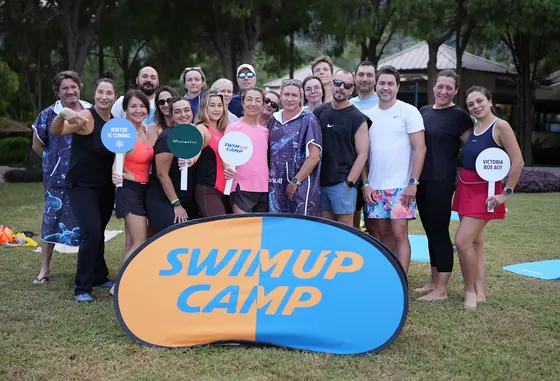
This note is about the place: the coasts, the season, the water and the journey. It is written for swimmers planning to travel, among them people from the United States, Switzerland and Germany who have joined our camps.
Why Turkey’s coasts for open water?
Several reasons, none of them about postcards.
- Sheltered bays. The coast is full of bays where boat traffic and currents can be managed. That matters more for a coached camp than open sea.
- Two seas. The Mediterranean and the Aegean are different in character, and our camps have used both. Camp 5 was on the Aegean coast at Sarımsaklı, Ayvalık. Camp 7 was at Kemer, near the Phaselis bays on the Mediterranean.
- A long season. Compared with much of northern Europe, the water warms earlier and stays warm later.
- Good facilities. Hotels and sports centres along the coast are used to hosting athletes.
- Easy access. Many places are a short journey from an international airport.
Each camp names its own location. We choose a bay for each one, for visibility, manageable currents and boat traffic, and room for a lifeguard and a support boat.
What a coached camp adds to a bay
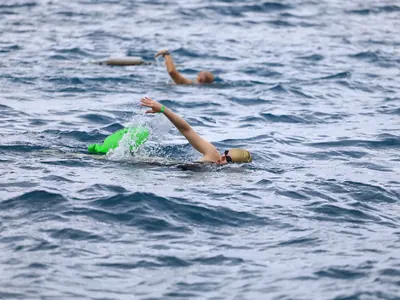
A bay alone is not a camp. At every session of a Swim Up Open Water camp a support boat and a lifeguard are on the water, a tow float is compulsory, and weather, sea state and currents are checked beforehand. The full set-up, and the four-day structure from pool assessment to the longer swim, is described on the Open Water camp page.
To judge any operator’s set-up, read How to choose an open water swim camp.
Water temperatures across the season
Sea temperature varies by place, depth, weather and year. It also changes through the season, from cool in spring to warmest in late summer and early autumn.
We do not give figures here, because a number without a dated source is not useful. For the camp you are considering:
- you bring your own wetsuit, because none is provided or hired out at camp; we share a recommendation based on the water temperature after you apply, and you try the suit in the pool on day one;
- you can check recent sea temperatures with the national meteorological service or a marine forecast for the area and month;
- if you are sensitive to cold, tell us.
Even in warm water, cold can build over a long session, so see our notes on cold water acclimatisation.
Getting to Turkey and around
Most visitors fly into one of the international airports on the coast, such as Antalya for the Mediterranean or Izmir for the Aegean, though the right one depends on where the camp is held. Check entry requirements for your nationality, including whether you need a visa.
Airport transfers and a wetsuit are not part of the package, so plan the last stretch. After you apply, we share travel and rooming details in writing, including how to reach the venue.
Prerequisites matter before you travel. You need to swim 400 m without stopping, and we run a short pool assessment on day one. See our note on prerequisites.
How to apply from abroad
The process is simple, and nothing about it depends on where you live.
- Check the prerequisite and your dates.
- Request a place on the application page. Tell us your level and what you want to change.
- Our team writes back within 48 hours. We will talk through whether the camp suits you, your room and the practical details.
- We share cost and payment terms in writing. Your place is confirmed with payment.
We do not publish prices on the site, and applying commits you to nothing. The FAQ covers common questions. The method is described on the method page.
When no open water camp is open, the page lets you join the list instead, and we write to you before the general announcement. See Swim Up Open Water for the current status.
When a new camp has dates, we reply to anyone who wrote to us before the public announcement.
Ask about datesWhen a new camp has dates, we reply to anyone who wrote to us before the public announcement.
Ask about datesWhen a new camp has dates, we reply to anyone who wrote to us before the public announcement.
Ask about dates